
Where are we now?
Here, we are right here, duh.

But where is here? Let me fill you in.
Today marks 2 months (and a day) since the heart attack. I’ve spent a lot more time in the medical world since then. A few weeks ago, I had an appointment with a cardiologist (the third so far). This time I saw a “sports cardiologist”. In all of my medical visits, other than the one that likely saved me, this has probably been the most impactful one.
I think, for you to best understand where here is, I will show you how we got here.
The Logan Doctor
It all starts in the hospital after the dust has settled from my surgery, I’ve had a couple of visits from the operating doctor and we’ve set up a plan of action going forward: An appointment in a month, then 6 weeks, three months, etc. He has laid out the timelines for my meds, put in a referral to cardiac rehab and so forth. A day or two before I leave though, one of the nurses comes in to discuss the details of the follow ups and informs us that the operating doctor is not in network for my insurance. That’s fine for my emergency care, but going forward I should see someone in network. Luckily there’s a different doc (cardiologist) in Logan I can see. They set up a follow up with him the next week.
A week later, I roll up to the new doctors office. I’m the first appointment of the day and we almost beat the receptionist. This has to be a last minute appointment so I’m sure they squeezed me in where they could, maybe even before normal hours. I feel a little like an inconvenience.
The receptionist checks me in, we wait a few minutes and they call me back. The normal pre appointment stuff happens, height, weight, verify medications, etc. Then Emily and I wait in a room for the doctor. A few minutes later the doctor walks in. He is an older gentleman, with obvious Eastern European heritage. This all tracks with the research I did on him beforehand.
If I remember right, the first thing he said was something like: “Well aren’t you a little young to be in here, what brings you in today?” except with an accent.
I was a little surprised. I don’t know why, I guess I was expecting him to already have a pretty good idea of what had happened, given the irregularity of my circumstances. With this expectation I hadn’t really prepared myself to recount all my medical adventures and I fumbled through a basic rundown of what had transpired. Emily tried to help and we managed to get out the essential details.
The visit wasn’t much longer than that. The doctor listened to a few things with his stethoscope, and reviewed my medications. When he came across the blood thinner he looked me right it the eye and said: “you know you’re never supposed to miss a day on these, right?”
“Yes,” I reply.
Then he leans in closer, peers deep into my soul and sternly says: “Never. Miss. A. Day.” I got the feeling that if I did miss a day, and a blood clot didn’t kill me, he would.
At the end of the visit we scheduled a follow up in 6 months (all the way in October) and that was it. No follow up testing, no blood work, no echo, nothing and no indication that anyone was going to try to figure out what the heck had happened.
We left a little underwhelmed, not because the doctor I saw was a bad doctor, just not the doctor I needed. I think he is a great doctor for the typical heart-attack crowd, which, I am told, I am not.
I really didn’t want to wait to October to make any progress. That’s a whole summer, waiting in the unknown, I wasn’t ready for that, but I was at a loss. The internet was pretty empty, even Letsrun.com, the troll-infested internet message boards for all things running, had nothing.
Going Somewhere Else
I don’t quite remember when it was, maybe a few days before or after the visit to the cardiologist in logan, amidst my searching for any and all information about young people having heart attacks while running I asked chatGPT. I think I asked what kind of doctors a 24 year old, who had a heart attack running a race, should see. One of the recommendations was a “Sports Cardiologist”. I’d never heard of such a thing.
Further research led me to a University of Utah webpage: Sports Cardiology. The U actually has several sports cardiologists.
At first I thought maybe I’d call them myself, see if they’d set up an appointment for me but it doesn’t seem like that’s how it works. The big red button “Refer a Patient” makes me think that sports cardiology isn’t something you just waltz into, unannounced. I also wanted to avoid as many insurance problems as possible; I figured a referral would help with that.
How was I going to manage that?
It kind of seemed like the logan doctor had no idea what had happened and no hope of ever knowing. I wondered what' he’d think of me taking things into my own hands.
I figured I would start with the first people who seemed interested, Mckay-Dee hospital. I phoned the hospital floor. Because they had referred me to the logan doctor, I was going to have to get any referrals from him.
After a few days I worked up the courage to call the logan doctor’s office. I kind of felt bad, like I would offend this guy by asking him to refer me to another doctor. It was not as bad as I thought it would be, the lady on the phone was very kind and helpful, she said she’d let the doctor know and he would send the referral over. A few days later I got a voicemail saying the referral had been sent, and the U would be in touch with me
Phew, no hard feelings, I think.
After a week or so of waiting I figured I best check up on things, make sure my referral hadn’t been lost in the aether or something. I phoned the U. After two or three tries I made my way through all the phone menus and ended up with a receptionist for the University of Utah’s cardiology department. I asked if they’d gotten my referral; they had. To my surprise, the receptionist started setting up my appointment right then and there. It took a little while because she had to figure out how to set it up as an athlete appointment but after 5 or 10 minutes I had an appointment with Dr Alan Jacobsen at the U’s Farmington clinic in two weeks. Lickety split.
This was a major relief.
The appointment
I tried to keep my expectations low for this appointment but I was excited. I spent the weeks leading up to the appointment brushing up on my cardiac medical terminology and researching Dr. Jacobsen. I sized up his CV, read his google scholar, skimmed his publications, and decided this was definitely the guy I wanted to see. He seemed curious, like he wanted to figure things out. He’d written about Damar Hamlin, the football player who collapsed after taking a hit in a Bills-Bengals game. He’d done research on endurance athletes and cardiovascular disease and air pollution and cardiovascular disease. He was younger, young enough to still have some drive, but not so young he had no experience. Best of all he’s an athlete himself, a cyclist, but an athlete nonetheless. It felt like a perfect match.
I did a pretty bad job not hyping myself up for the appointment.
The day finally came and we drove down to Farmington. We arrived with just enough time to find the office and check in. Sitting in the waiting room I was so nervous I was afraid I’d have another cardiac event right there. Its a good thing we didn’t get there too early.
Soon enough, someone called my name to take me back, they got my height, weight, the normal stuff, then a 10-lead EKG, already things are looking better. After the tech left we waited for another 15-20 minutes. This could be a good sign, he’s taking a minute with the previous patient because he’s doing his due diligence, or its a terrible thing, he’s two patients behind, going to come in rushed, and want to blast through the appointment as fast as possible. My mind was doing circles.
Finally, in walks Dr. Jacobsen, at this point, it almost feels like meeting a celebrity. He extends his hand, Emily and I shake it and he introduces himself in a thick Irish accent. He sits down in his doctor chair and says something to the effect of: “alright, I’ve already seen both your echoes, the angiogram, and read all your notes but I want to hear your side of the story”. At that moment, all the stress leaves, my dreams have come true.
Emily and I give him our run down and he chimes in now and then to explain some things. I explain my athletic history, he asks clarifying questions like how much my weekly volume was, what kind of events I competed in, how long I’ve been competing and I know: he gets it. Then he explains to us what he does:
“I’m a sports cardiologist” he says, “I work with people for who sport is an integral part of their lives, not just something they do to stay healthy”. Confirmed, this is the guy I want to see if I want to get back to as much as I possibly can.
The rest of the appointment is wonderful. He explains a bit about the interactions between exercise and the risk of a cardiovascular event, how during exercise your risk of a cardiovascular event is slightly higher than at rest, but with more consistent exercise that risk becomes lower. He explains that right now, that risk is a bit high for me after an MI (myocardial infarction). For some reason, he doesn’t ever say “heart attack”.
Then he goes through a list of blood tests he’d like to run to rule things out, figure out why this happened, and prevent it: HIV, inflammatory markers, clotting speeds, etc. When I went downstairs to get my blood drawn in the walk-in lab they must’ve filled 12 or 13 vials. He also wants to do another echo, and a stress test at 3 months post MI, once I’ve had a chance to recover a bit.
This whole time he’s taking notes and charting. Every time he pauses to chart he asks if we have any questions. This is good because it gives Emily and me a chance to think about our questions and we ask quite a few good ones. We find out: no this is probably not genetic, no my life expectancy will probably not be affected. Then, Emily asked the big one: “So all the other doctors we’ve seen have said probably nothing over a marathon, if even that, what do you think the chances are Paul is able to do Ultras again?”
His response: “I don’t really see why that would be an issue, usually your heart rate stays pretty low in those because they’re so long, doesn’t it. I’d be more worried if you wanted to do a ton of high intensity interval training.” Boom! Life-changing. I think this guy gets it. He has heard me out, spoken my language, and I can tell he understands. If anyone is going to get me better its this guy.
While we wont really know what I can and can’t do until after the echo and stress test, that sentence gave me back so many things, not the least of which was hope. It looks like I probably wont be headed to the Cross-fit Games anytime soon, but Western States, or the Bear is no longer out of the question anymore. Maybe not this year, but also not never. That’s big.
Lots of other things happened in the appointment but its all blended together at this point. I think Emily recorded bits and pieces on her phone and Dr. Jacobsen took great notes. Someday I’ll review it all.
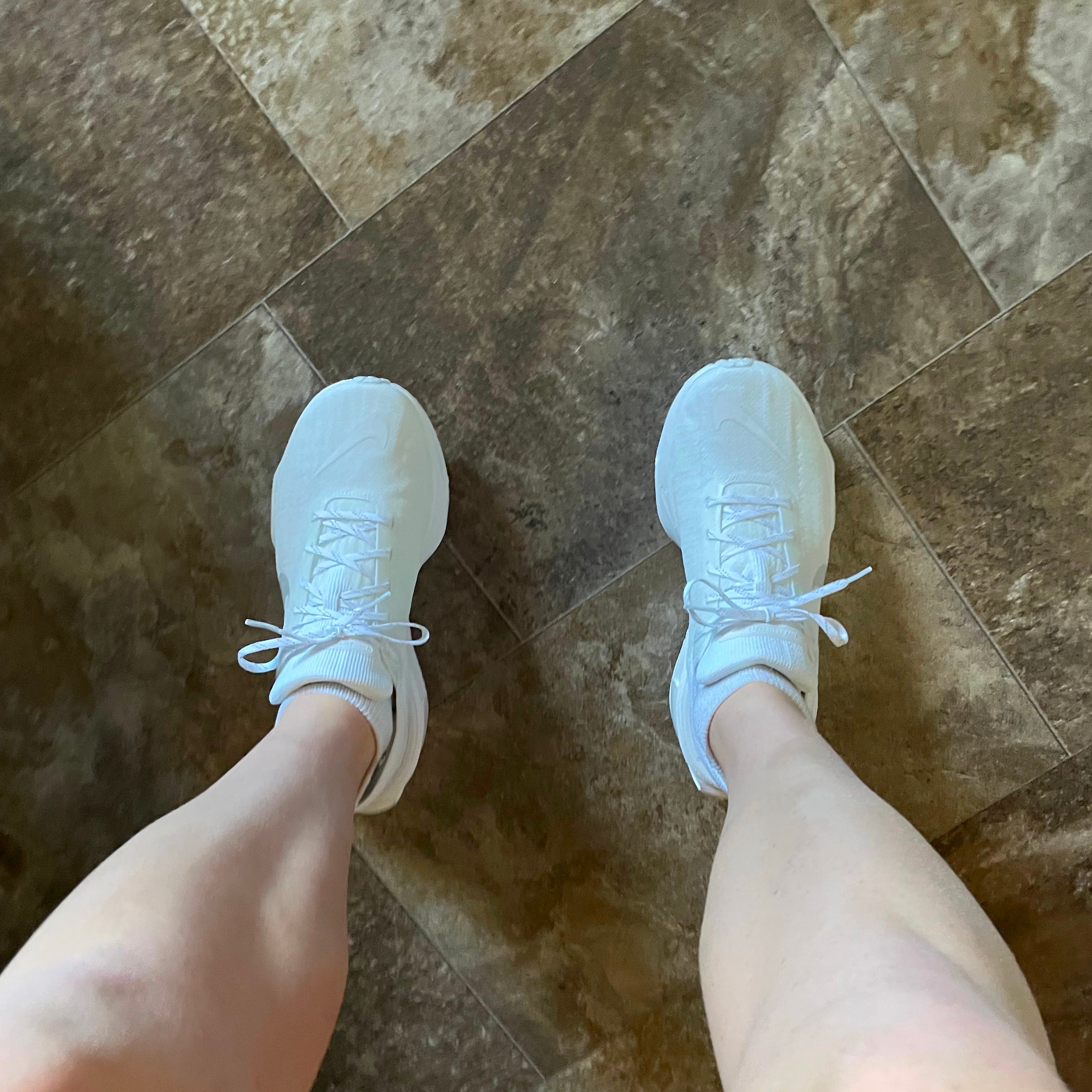
On our way out of the U of U clinic we had to drive past a Nike outlet store, for fun and to celebrate, we stopped. Emily and I both found killer deals on new running shoes. I’ll take that as a good omen.
A few days before the appointment, at cardiac rehab, I got the ok to get hy heart rate up to 156 bpm. This means I can do a lot more running, and my runs are starting to look more like a normal easy run before all of this. I can be out for more than an hour, and everything feels normal, frustratingly normal.
Occasionally, when I do something a little more difficult than what I had been doing, I can feel it in my heart. Its not a sensation I’ve really had before, almost like I can feel my heart muscle, like its a little sore, at home, we call it the “tired heart”. In spite of the “tired heart”, I can tell things are healing, with the passing days my heart rate gets lower and lower at a given speed. He feels stronger, he’s tired less and less.
It’s been a ride for sure but having a medical experience you hear a lot about other medical experiences, especially if you’re trying to gather your family history. I can tell you some people had to be on this ride a lot longer than me to get to a similar place. I owe a big one to my aunts and Emily’s aunt with their experience and medical know-how, the doctors at Emily’s work with their curiosity and knowledge, and Emily with all her experiences navigating her corner of the medical world.
Hope
Dr. Jacobsen gave me hope, a lot more than I had before. I was doing a pretty good job of telling myself whatever happened would happen. I was doing alright skirting around the thoughts of what I might never be able to do, trying not to acknowledge them; still, they camped out on the edge of my mind, waiting for moments when I couldn’t put up a fight and save face.
With some new hope, they have to camp a little further away.
I hope that today, wherever you are, you get to find hope, but if hope is a hard thing to find right now, know that I am hoping for you.
Thanks for stopping by :)
It’s a huge, huge relief to find the members of your medical team. The best ones just feel right. It sounds like you are on track!